Dominican Republic
Where the Americas began, colonial Santo Domingo meets merengue rhythm and Caribbean coastline.
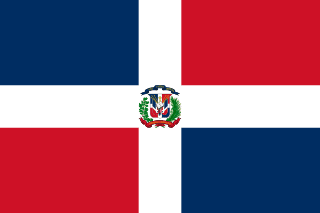
Juan Pablo Duarte is honored as the Father of the Nation, the founder of La Trinitaria, the secret society that organized Dominican independence in 1844 and conceived the vision for the national flag. Alongside fellow founders Sánchez and Mella, he gave the country its founding voice.
The Dominican Republic's national motto is Dios, Patria, Libertad, meaning God, Homeland, Liberty. It is the only national flag in the world to carry an open Bible at its center. In a hemisphere built on common ground, the Dominican Republic shows how faith, land, and freedom can anchor a nation's identity together.
Get to Know the Dominican Republic
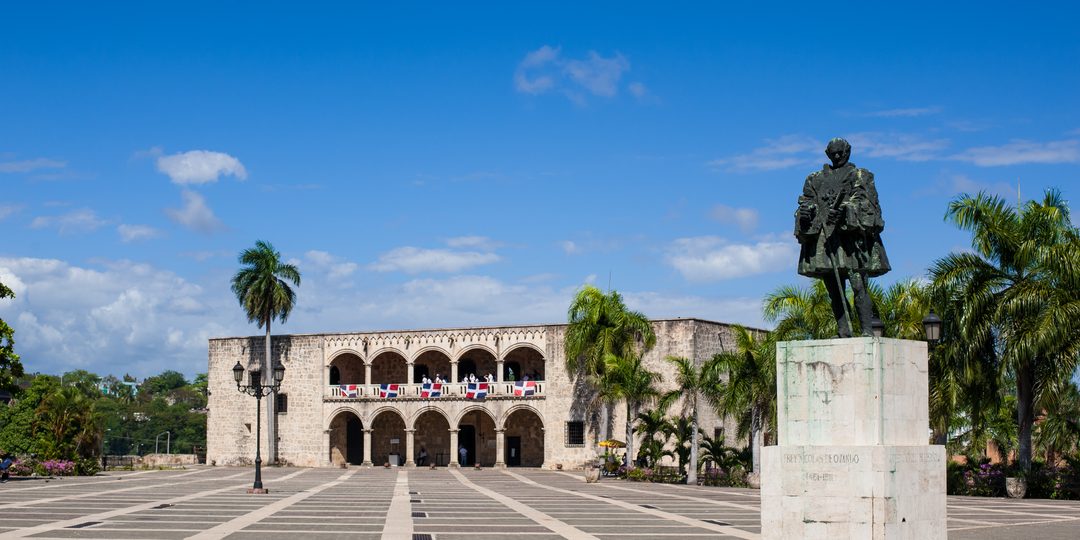
Capital: Santo Domingo. Official language: Spanish. Currency: Dominican peso. Founded in 1496, Santo Domingo's Colonial Zone is a UNESCO World Heritage Site and the oldest continuously inhabited European settlement in the Americas.
Fun Facts
- The Dominican Republic shares the island of Hispaniola with Haiti, the only border of its kind in the Caribbean.
- Its flag is the only one in the world to feature an open Bible at its center.
- Merengue, the national dance, is recognized by UNESCO as part of the world's cultural heritage.
Why Visit
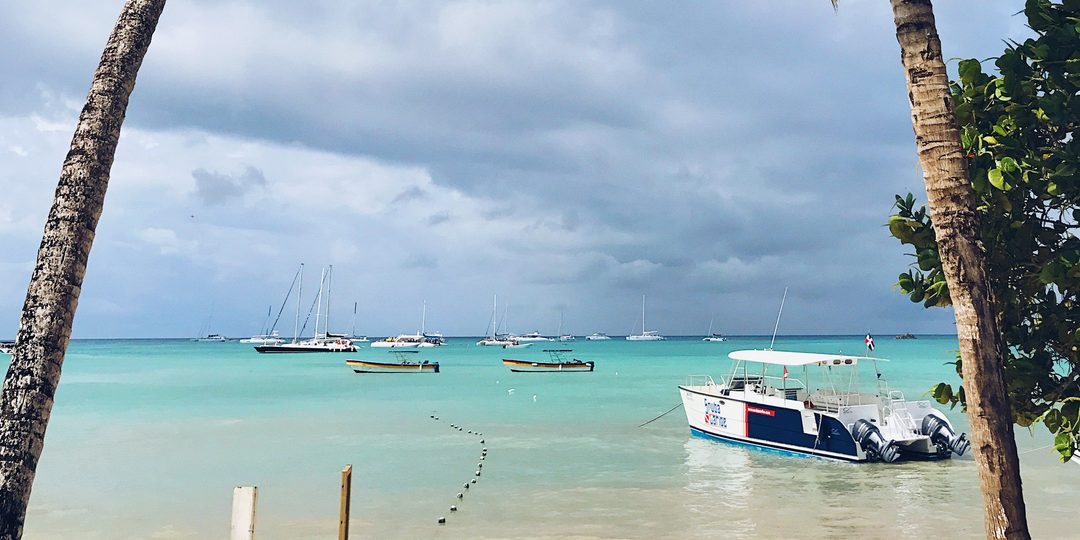
The Dominican Republic draws visitors with the colonial streets of Santo Domingo, home to the oldest cathedral and paved road in the Americas, alongside the beaches of Punta Cana and Puerto Plata. Merengue and bachata fill the streets, and the Cordillera Central offers hiking to the Caribbean's highest peaks.
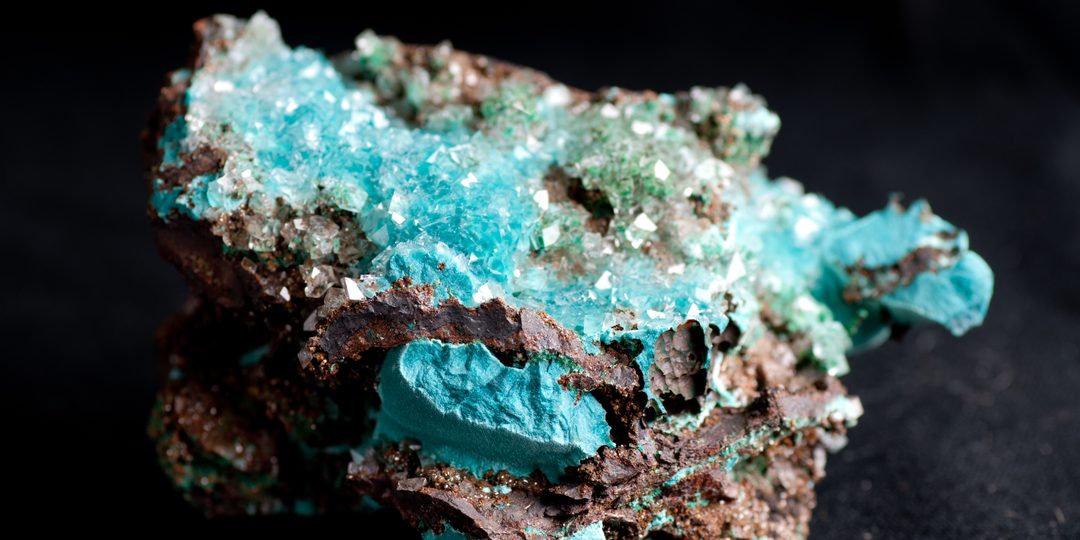
Made in the Dominican Republic
The Dominican Republic is known worldwide for its cigars, rum, coffee, and cacao, along with larimar, a rare blue gemstone found nowhere else on Earth. This space is reserved for a future Local Marketplace Spotlight, featuring Trust Standard certified Dominican businesses once that pillar of the Americas Ecosystem exists. Soon.